- 42nd Street (Released March 11, 1933)
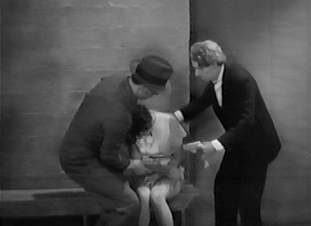
In the video copy of this film I saw, Walthall has the uncredited part of
"concerned actor," who--without uttering a word--watches on as the leading actress is attended
to after having a fainting spell. His scene lasts a few seconds.
Whatever additional scenes he may have had were left on the cutting room floor. I despise musicals so I fast-forwarded the tape until I saw Walthall, and then returned it to the video store. No film rating as a result.
Walthall
Factor: D
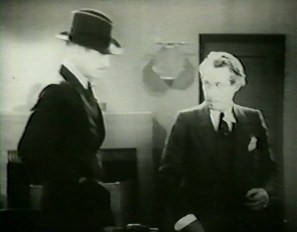
"Is that a gun in your pocket or are you just...oh, forget it."
- The Whispering Shadow (Released April 18, 1933)
Walthall plays J. D. Bradley, the stern
and sneaky president of the Empire Transport and Storage Company,
in this
12-episode serial starring Bela Lugosi. Although he gets second
billing
on the film posters and video covers, of the over 3 hours this serial
ran, Walthall's
scenes make up a whopping 18 minutes. Most of the time, he is a
mere bystander, observing the chaotic interactions around him.
His most significant scenes are in chapters 1 (where his character
expresses concern for his drivers who keep getting rubbed out by
the elusive Whispering Shadow), 9 (during which he takes claim to the
stolen jewels that were hidden in his warehouse), and 10 (where he
is forced to give up the key to the safety deposit vault where he had
placed the jewels and is tied up and passively locked in a closet).
Unfortunately, chapter 10 is all she wrote for Mr. Bradley.
He is unceremoniously killed--off camera no less--by the Whispering
Shadow's radio death ray. As is revealed later, his death was even
a mistake! A very inglorious ending to a Walthall character.
In addition, the acting in this serial--save for Walthall's of course--
is so bad it is actually comical although Karl Dane is genuninely hilarious
as Sparks as he was as Slim in the classic First World War film
The Big Parade. (Unfortunately, Sparks would prove to be his last role
as he, receiving less parts due to his thick Danish accent, would
commit suicide the next year--an apparent victim of the
talkies). I am the worst at whodunits, but I was
able to guess the Whispering Shadow's identity by the second chapter.
It is certainly not a crowning moment in the early talkies era, but
Walthall fits his role very well and I did enjoy watching the series
(if only to find humor).
Walthall
Factor: B Film Grade: B-
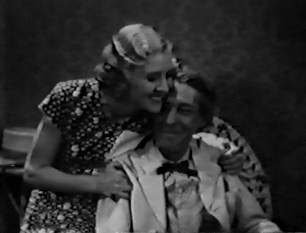
"Isn't he adorable?" Oh yeah.
- The Flaming Signal (Released July 25, 1933)
In Klondike fashion, the leading man
crash lands his plane on the island of Tabu with his dog Flash (not
the cute basset hound from The Dukes of Hazzard, but a Rin Tin Tin
wannabe). Here he meets his leading lady (played by Marceline Day
of London After Midnight) and her missionary father, Rev. James
(played by the little hero, himself). Rev. James's nemesis is the
owner of the trading post, Von Krantz (played by Noah Beery; his brother
Wallace Beery played Pancho Villa in Viva
Villa!). Von Krantz abuses the natives of the island by paying
them far less than market value for the pearls they gather for him
and then swindles them out of those paltry sums by selling them excessive
amounts of liquor. The anger of the islanders reaches its zenith
when Von Krantz abuses a native girl and then shoots the high priest of
the tribe. Rev. James and the rest of the whites are held captive in
Von Krantz's store as the natives engage in a ceremony to raise
their priest from the dead (what the heck, it's a movie). Rev. James
finally ventures out to broker a truce. A drunken Von Krantz, who
is left alone to wave a shotgun around, shoots the recently risen high priest
(do they have nine lives like cats?)
from the window. The moment the priest falls, Rev. James is stabbed
to death. The leading characters escape while Von Krantz is attacked
and killed by Flash (the dog is a murderer?). After retrieving the
body of Rev. James and giving him a proper burial, the couple
and their canine friend spot a rescue ship that was lured by a bonfire
started by Flash (hence, the title of the film). After watching this
film, I realized there is not much of a point to it. Nothing is
really solved except that the bestial trader is killed (by the dog,
not by the people he oppressed) and the leading man gets his
girl. Henry's character is also killed, so it doesn't even sport a
good wins out over evil theme. Still, Walthall looks very good in this
film, dressed all in white. His on-screen daughter even describes him as
"adorable." His character's quick and sudden demise lowers the Walthall Factor grade, though.
Walthall
Factor: B Film Grade: C
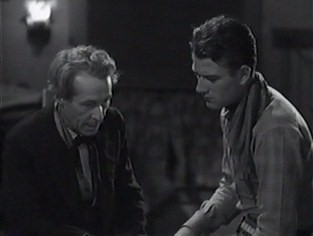
"I'm ashamed to admit this John, but...
I once bought a
pair of pre-ripped jeans."
- Somewhere in Sonora (Released May 27, 1933)
Walthall gets second billing in this
John Wayne western, and I don't know why. He is only on screen
for the first third of the film. Walthall plays
Bob Leadly who helps Wayne's character break
out of jail after being wrongly accused of rigging a rodeo
(pronounced "ro-day-o") stage coach race. Leadly then tells
Wayne about his estranged son, Bart, who left for Sonora and
hooked up with the notorious Monte Black gang (a gang from
which no man has escaped alive). Of course, Wayne's character
is so grateful to Mr. Leadly that he and Duke take off for Sonora
to find Bart. Walthall looks great, in fact, he looks better in
this film than in the earlier Wayne western Ride Him, Cowboy,
in which Walthall's character had much more screen time.
One very cute scene has Wayne's famous horse Duke brushing up
against him.
Unfortunately, his character is not seen again throughout the
remainder of the film which lowers the Walthall factor grade.
Walthall
Factor: B+ Film Grade: B+
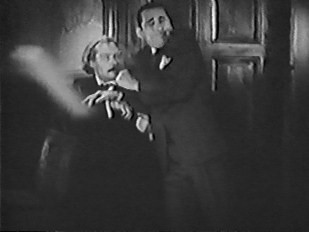
"Did someone just throw the script?"
- Laughing At Life (Released July 12, 1933)
I'll admit, I had problems following
this film. Essentially, it is about a gunrunner, Captain Easter,
who abandons his family to escape the law and ends up in revolt-plagued
Alturez. Walthall plays President Valenzuela in a role similar to
the one he'll have in Viva Villa. Valenzuela is well-meaning
and honorable but cannot get reforms passed in time to quell the
revolutionary tides. He has a momentary anxiety attack after looking
out the window at the angry crowd which allows Walthall to get his
acting juices going if only for a second (unfortunately, most of
his roles duing this time did not call for a lot of emotion). Easter
is seen as the leader of the revolutionary forces and the military is
soon on his trail. Meanwhile, Easter comes into contact with a
young civil engineer (of course, he is his long abandoned son).
The young man still carries a torch for the father he hardly knew,
and Easter is bent on preventing his son from choosing the gunrunner's
life. After his son is arrested, Easter confronts Valenzeula and
obtains a presidential pass to help him stop the rebels (who have
since turned on him). Easter is able to get revenge on his rivals,
get his son out of prison and obtain a fake ID to save himself, all
in the span of 15 minutes or so. Walthall only has about 5 1/2
minutes on the screen, but does look quite nice with the mustache
which helps the Walthall Factor grade. The film itself, however,
is very annoying and hard to follow.
Walthall
Factor: B Film Grade: C-
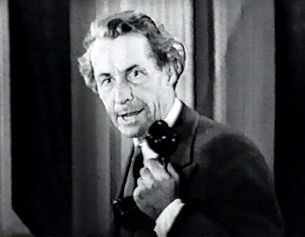
"Blast! They're out of the Kung Pao Shrimp!"
|
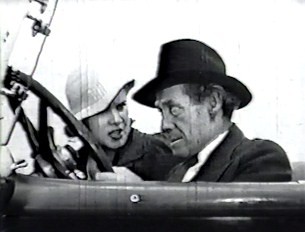
"I told you to take that left turn at Albuquerque!"
|
- The Wolf Dog (Released September 30, 1933)
This serial is in much the same format
as The Whispering Shadow with the long flashbacks, intros, etc.
The plots have some similarities as well. Walthall's character, Jim
Courtney, is falsely accused of stealing from the Courtney steamship company.
Courtney's nephew, Frank, is about to inherit the fortune of his
father, but the company president, Norman Bryan, hopes to take the
boy's riches, land Jim Courtney in prison, and steal the invention
of Frank's friend Bob Whitlock; a radio ray with the capacity to blow
up fleets (radio death rays seemed to be a popular story line at the
time, being the focus of such films as Whispering Shadow and Chandu the
Magician). No worries, because Frank has his canine friend, Pal,
by his side who he found leading a pack of wolves. Like Whispering
Shadow, this 12-chapter serial has plenty of action and fisticuffs. Unlike Shadow, Walthall's character plays a
much more significant role in scenes lasting around 21 minutes
and is in the final scene. He is also in action scenes with
his character jumping from a car and running from Bryan's goons in
chapters 3 and 4.
Walthall
Factor: A- Film Grade: B
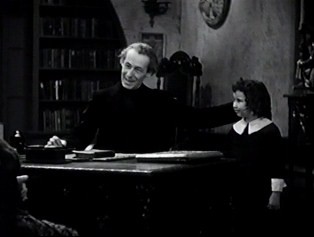
"And this little hellion makes Sunday school nearly unbearable."
- The Sin of Nora Moran (Released December 13, 1933)
The Sin of Nora Moran is an odd film about a woman (Zita Johann)
who is about to be put to death for killing a man. The story is told
through Nora's dreams as she lapses into unconsciousness while
awaiting her fate. Additional parts of the story are told by the district
attorney who was involved in her case as he talks with
the wife of Moran's lover (who is also the governor,
played by Paul Cavanagh). The film uses the `narratage' technique first
used the same year by Preston Sturges in `The Power and the Glory'
which consists of voice-over narration and flashbacks and
flashforwards (I only know this because I read it somewhere). The film gets even more complex, with flashbacks within
flashbacks, flashfowards within flashbacks, etc. Some of the visual
techniques are quite impressive for 1933. An interesting story with an
odd ending. The acting seems strangely unemotional considering the plot
of the film or, perhaps, that was the point. Some of the conversations in
the flashbacks indicate that the characters have been reliving the story
again and again. Perhaps they are now devoid of most of their previous
feelings. Henry Walthall is in a typical role as Father Ryan who is
seen at the beginning of the film helping Nora, as a child, get adopted, giving
advice to a grown-up Nora, and later next to Nora's coffin in a fantasy scene.
Walthall
Factor: B Film Grade: B
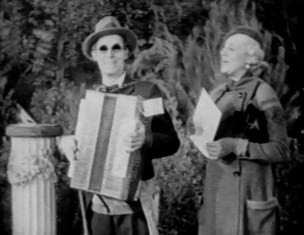
"Yes madame, I'll play any request you'd like...
so long as it's 'Kingdom Coming' and you
spell my name
correctly in the opening credits."
- Beggars in Ermine (Released February 22, 1934)
Well, first off, Henry B. Walthall's
name is misspelled in the opening credits. That did not bode well
for the picture. All in all it is a very odd film with Henry Walthall
playing, of
all things, a blind accordion player. An owner of a steel mill,
John Dawson,
loses his legs, business, and family to a freakish accident and
a heartless competitor. Dawson meets Walthall's character,
Marchant, in the hospital. They concoct a plan to start a new business
with a group of beggars with the hopes of enacting revenge on Dawson's
evil competitor. Marchant remains Dawson's constant
companion, playing the accordion on the streets while giving contributors
sheet music so he can claim to be running a business rather than
engaging in the illegal practice of begging. The funny part of the
film is that Marchant appears to only know one song, the Civil War
anthem "Kingdom Coming."
Walthall
Factor: B+ Film Grade: C
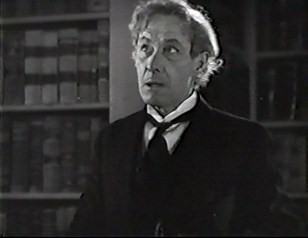
"You young doctors take for granted the giants
who came before
you: Pasteur, Sir Charles Bell,
and what's his face."
- Men in White (Released April 6, 1934)
This very hard-to-find film stars
Clark Gable as a promising young hospital intern (Dr. George
Ferguson) who is
taken under the wing of the reknown Dr. Hochberg. Ferguson's
ambition is to work with Hochberg in Vienna to become a great
surgeon. His rich, spoiled brat fiancee, however, is not willing to
support him in his quest because she wants him to spend more time
with her. Walthall plays Dr. McCabe. He is seen at the beginning
of the film telling the young interns that they should have more
repect for the profession and in the final scene closing the
doors to the hospital library. Walthall looks wonderful in this
film. There is such a convincing subtley in his remark "Chilly in here,
isn't it?" when faced with cold silence after preaching his idealism.
If only he had other scenes in the film (perhaps giving
advice to Ferguson) the Walthall grade might be an 'A'. The film,
itself, is quite good, with a realistic view of the medical profession
and the absence of any excessively annoying character.
Walthall
Factor: B Film Grade: A-
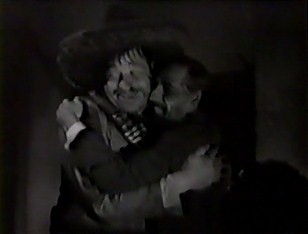
"Tell me again how many wounded you killed at Carnago, Pancho!"
- Viva Villa! (Released April 27, 1934)
In this classic starring Wallace
Beery, Walthall plays Francisco Madero, the trusting, merciful, and
naive first President of the 1911 Mexican Revolution.
Walthall would have a few of these honorable, borderline
self-righteous character
roles during the talkies era (Judge Priest, Dante's
Inferno, heck, even Murder in the Museum).
His part is very significant but brief, as his character would
be assassinated by those in whom he had mistakenly placed his trust,
sparking revenge courtesy of his friend and admirer Pancho
Villa (Beery). The few touching, sympathetic scenes between him and Beery are
quite nice. The film itself is a rather lengthy romantic
glorification of Villa's life which probably has many historical
inaccuracies,
but Beery's portrayal of Villa is excelente.
Walthall
Factor: B+ Film Grade: B+
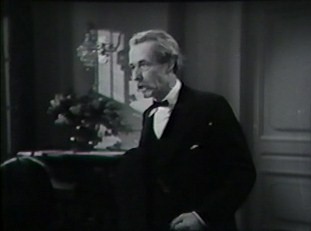
"Never deprive an old man of his coffee!!!"
- City Park (Released May 1, 1934)
I am very
lucky to have found a copy of this film as it is a rare one and also an excellent one where Henry B. Walthall is concerned.
Sally Blane got top billing for City Park but, as a vintage
review clipping I have for this film states, "Walthall is the picture." Walthall plays Col. Henry
Randolph Ransome, complete with handlebar mustache, who is seen near the beginning of the film relaxing on a park bench with two friends.
They spot a young woman (Blane) trying to act like one of the "working girls" and obviously out of her element.
She tries to pick up a plain clothes officer and is about to be hauled off to jail when Ransome
comes to her rescue. He tells the officer the woman is his granddaughter "Isabella" (coincidentally, Isabel was
the name of Walthall's first wife)
who is working on a report on the rougher side of society. Succeeding in getting her off the hook, Ransome questions the woman
who reluctantly reveals she is Rose Wentworth who has
recently been kicked out on the streets by her parents for trying to run away with her boyfriend and
has also been thrown out of her apartment for failing to pay her rent. Ransome takes on the role
of guardian and he and his friends get her apartment back and help her get back on her feet.
Ransome's home life isn't too hot either. He lives with his son, daughter-in-law, and grandson. His son
has little respect for the Colonel and doesn't trust his judgement while his cruel daughter-in-law treats
him like a child, even deciding how many cups of coffee he is allowed to drink. Ransome begins spending more
time with his friends and Rose at her apartment. One humorous scene has him asking a general he knows who
is working for the National Trust Company for a loan to help a young girl he "picked up in the park."
The general, of course, thinks there is hanky panky going on and loans Ransome the money "out of curiosity."
This film is definitely pre-Code with some sexual innuendoes and crude humor (with Walthall playing the
straight man).
Despite the general's dirty imagination, Ransome's actual intentions are to contact Rose's old boyfriend, Charlie,
in the hopes that the young runaways will get back together and marry. Rose, however, predictably
begins to fall in love with Ransome's grandson, Raymond. In the meantime, Ransome gets Charlie a job driving
an armored truck for the National Trust Company and Charlie gets involved with some criminal minds to stage a robbing
of the truck. Ransome quickly comes to Charlie's defense when he is questioned and, later, arrested by authorities.
Believing his innocence, Ransome and his two friends all want to confess to the crime so they play cards to decide
who will take the rap. It takes one of the wroking girls in the park to finally set things straight.
Col. Henry Ransome is one of Henry B. Walthall's best roles of the Talkies. He usually played respected authority
or fatherly types but, in this film, in a similar vein as Police Court, he is seen as a man who is "past it."
However, unlike Nat Barry in Police Court who is a pathetic figure who put himself in his sad situation through drink yet is still beloved,
Colonel Ransome is a proud man who doesn't seem to have lost his vitality or
lucidity yet is completely disregarded by his family.
He tries to maintain his dignity but is fed up with his treatment and sometimes his anger at his family is very evident.
Walthall has many angry emotional scenes here which is a welcome change from his many serious, restrained roles. "Walthall is the picture"
and, therefore, I believe the rare "A+" Walthall Factor grade is in order. The film itself is enjoyable though a bit long and, as mentioned
before, there are also several tongue-in-cheek moments that would not have survived the cutting room during the Code era.
Walthall
Factor: A+ Film Grade: B+
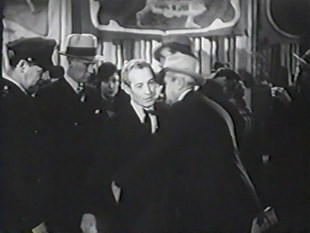
Prof Mysto being frisked: "You'll find
nothing that would kill even one of my rabbits."
- Murder in the Museum (Released April 6, 1934)
Walthall gets top billing in this rather
tawdry little thriller (complete with belly dancers, a talking lady
head, and an armless painter)
inspired by the controversial English film
Freaks. One reviewer
http://us.imdb.com/Title?0025531#comment notes that this film
"cleverly co-opts the whodunit format to provide a mediation on
urban cynicism in Depression-era America."
I didn't get all that from it, but what I did get from watching
this film is that Walthall is terrific as
the cynical, philosophical Prof Mysto. As in The Whispering
Shadow, all character roles often take a backseat to the young
couple
hell-bent on solving the case (played by John Harron and Phyllis
Barrington). Unlike The Whispering Shadow, however, when
Walthall
is on screen, he commands all
attention (and looks great I might add).
Walthall
Factor: A Film Grade: B
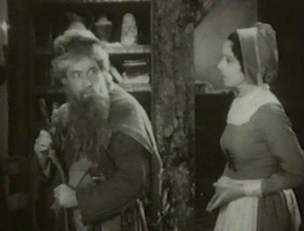
"It's deja vu all over again."
Again as Roger Prynne "Chillingworth."
- The Scarlet Letter (Released September 18, 1934)
In this rendition of the Hawthorne
classic, the courtship between Hester Prynne (Colleen Moore) and Pastor
Dimmesdale (Hardie Albright) that made up a major portion of the Lillian Gish
version, is skipped entirely. The absence of this background
causes the scene where Prynne receives her 'A' to be less dramatic. The upside
to this version is that Walthall's character (Roger Prynne once again)
has much more significant air time than in the silent 1926 film.
Walthall is seen right from the beginning and his character is given
the opportunity to explain his feelings. He actually isn't completely unsympathetic to Hester's plight. Walthall's character also has more scenes with the Pastor as he sadistically contributes to the adulterer's slow
torment. As a Walthall fan, I found this film to be a big improvement
from the silent one. As far as films go, however, the Gish/Hanson
portrayal rules.
Walthall
Factor: A- Film Grade: B-
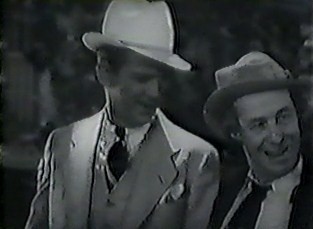
"And this is my dear, old friend...what's-his-name."
- The Lemon Drop Kid (Released September 28, 1934)
This film is very hard to find. I don't recommend putting too much effort in searching for it. There is a 1951 movie of the same name which stars Bob Hope and has little in common with this film save for horse racing and William Frawley. In this 1934 version, Wally Brooks, known as The Lemon Drop Kid due to his habit of popping lemon drops, is a scam artist and self-professed "horse medium" who hangs out at the races giving bad advice and taking bets without booking them. He is played by Lee Tracy who, in another connection to a Walthall film, would be booted off the Mexico City set of Vivia Villa! after starting a fight.
Escaping the law after a scam gone bad, Lemon Drop meets Jonas Deering (Walthall) passed out under a car. He finds it amusing when he learns that his new drunken friend lives on Water Avenue. Jonas invites his old friend "I forgot your name" home and promptly sleeps it off. Jonas's daughter falls for Lemon Drop and gets him on the straight and narrow. She gets him a job as a sales clerk, marries him, and bears him a son but dies soon after. Not long after this tragedy, Brooks's lemon-dropping, scamming ways catch up with him and he is sent to prison. Only a meeting with his little son makes him want to turn his life around. William Frawley plays Lemon Drop's fellow scam artist "Professor" who ends up being a big help to him. Although this film is almost 20 years before I Love Lucy, William "Fred Mertz" Frawley looks the same. The film has some clever one-liners though Lemon Drop's machine-gun delivery of horse racing lingo gets old fast.
As to Walthall's role, unfortunately, Jonas Deering is not an endearing character. Walthall is an excellent, cute drunk and has the mannerisms down pat, but it eventually becomes clear that Jonas is not a sympathetic character; rather, he is a pathetic drunk who does not seem to care about his daughter struggling through a very difficult pregnancy from which she would not survive and his own grandson of whom he is inconceivably given charge after Lemon Drop's imprisonment. He also dies off camera. The "Professor" mentions to Lemon Drop while visiting him in prison that his father-in-law drank himself to death causing his son to be put up for adoption. Walthall's scenes make up about 5 minutes of the film.
Walthall
Factor: C Film Grade: C
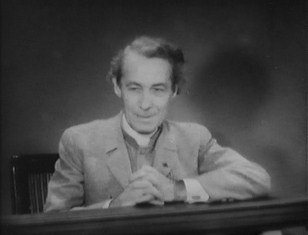
"...Furthermore, I demand a new contract
with
Fox with higher pay and better film roles."
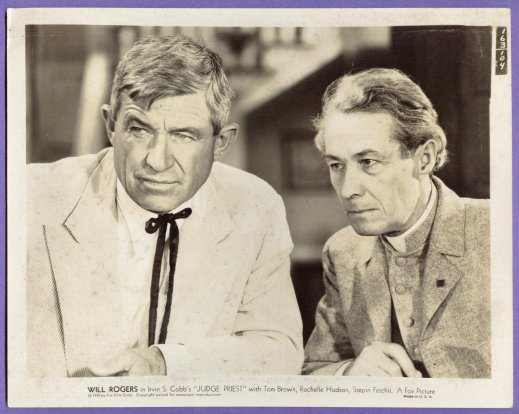
- Judge Priest (Released September 28, 1934)
As the Reverend Ashby Brand, Henry B. Walthall plays
a very respectable part in this film
starring Will Rogers. Walthall actually ends up taking over the story in
a 6:45 speech as character witness for a convict turned Civil
War hero. According to Walthall's obituary in the Los
Angeles Times, he had declined the use of cue cards and recited
the speech verbatim in one take. The article mentioned the
speech was 10 minutes long, leading me to believe that a part of the speech
was cut in later releases (I think it may have been after the sentence
ending with "and he was alone," as the next line does not seem to
follow very well). The speech is actually a lot of Confederate
sympathizer fluff, but it works
to exonerate the defendant. As for the film itself, it is quite
charming with Rogers's characteristic hometown humor. The blatant
racial stereotypes, appropriate for the time the film was portraying,
can be nauseating though. The character who frequently spits
during the trial to thunderous laughter is particularly annoying.
All that aside, Walthall looks fantastic in this film! If a local
pastor looked like him, I might even go to church on occasion.
Walthall
Factor: A Film Grade: B
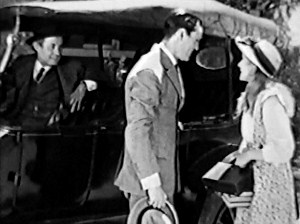
"Hey, Elnora! Check out this sweet ride!"
- A Girl of the Limberlost (Released October 15, 1934)
I finally got a copy of this rare film. It is the story
of a teenaged girl Elnora Comstock (Marian Marsh) who has ambitious goals of going
to high school and college but is discouraged by her strict and abusive mother
(Louise Dresser). The mother resents her daughter because her husband had wanted a
son and because she couldn't save his life because she gave birth at the moment
he was drowning in a swamp (now that was just poor timing on his part). Elnora
is favored by a kind neighboring couple who financially support her schooling, Margaret
and Westley Sinton (played by Helen Jerome Eddy and Ralph Morgan who was "dear old Charlie" in Strange Interlude and was the brother of the "Wizard of Oz"
Frank Morgan). Henry B. Walthall plays Dr. George Amon (or "Ammon"--imdb spells it both
ways). We get a quick glimpse of him at the 4:00 point as he's leaving the Sinton's house
after delivering Elnora. With his back to the camera, he says, "Hello, Westley."
Dr. Amon is the uncle of Phillip Amon
who he introduces at the 39:00 point as being on vacation after suffering "a breakdown from
overstudy" (so that's what they called it back then). He gives Elnora a lift to the high school,
hosts a party at the 69:00 point, and talks to Westley about fishing bait (a subject I'm sure he
knew plenty about in real life) at the 73:00 point; those are all the appearances by Dr. Amon.
Back to the story, Elnora falls for the nephew but he is already engaged. Of course, that
will change as well as the mother's resentment of her daughter. Walthall looks great--especially
in the car, but I don't think his screen time was more than maybe five minutes if that. The film
is nice with excellent acting across the board--I like how the school kids made fun of Elnora
during her first day (kids have always been cruel) and the child actor who played the orphan
boy was especially good.
Walthall
Factor: C+ Film Grade: B+